
When it comes to heavy-duty flooring solutions, rubber mats are widely used across industries. But one common confusion buyers have is:
👉 What is the difference between cow mats and gym mats?
👉 Can cow mats be used in a gym?
👉 Are gym mats suitable for dairy farms?
If you are a dairy farm owner, gym operator, distributor, or bulk buyer, understanding the difference between cow mats and gym mats is essential before placing a bulk order.
As a rubber mat manufacturer exporting globally, this detailed comparison guide will help you choose the right product based on load capacity, durability, comfort, and application.
What Are Cow Mats?
Cow mats (also called cattle mats or dairy farm rubber mats) are heavy-duty rubber flooring solutions specially designed for livestock areas like:
- Dairy farms
- Cattle sheds
- Buffalo sheds
- Horse stables
- Livestock housing units
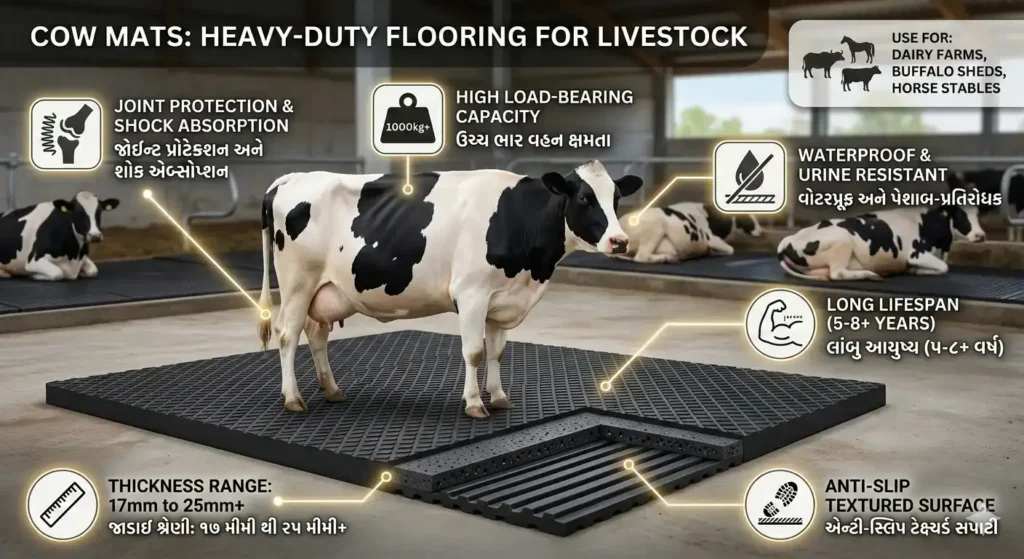
Key Features of Cow Mats:
- High load-bearing capacity (1000 kg+ per animal)
- Anti-slip textured surface (diamond top/groove pattern)
- Shock-absorbing base for joint protection
- Waterproof & urine-resistant
- Long lifespan (5–8+ years)
- Thickness range: 17mm to 25mm (or more)
Cow mats are designed to improve animal comfort, milk production, hygiene, and hoof health.
Diamond Cow Mat | Diamond Top Groove Bottom
What Are Gym Mats?
Gym mats are rubber or EVA-based flooring systems designed for:
- Commercial gyms
- CrossFit studios
- Home gyms
- Yoga & fitness centres
- Weightlifting areas
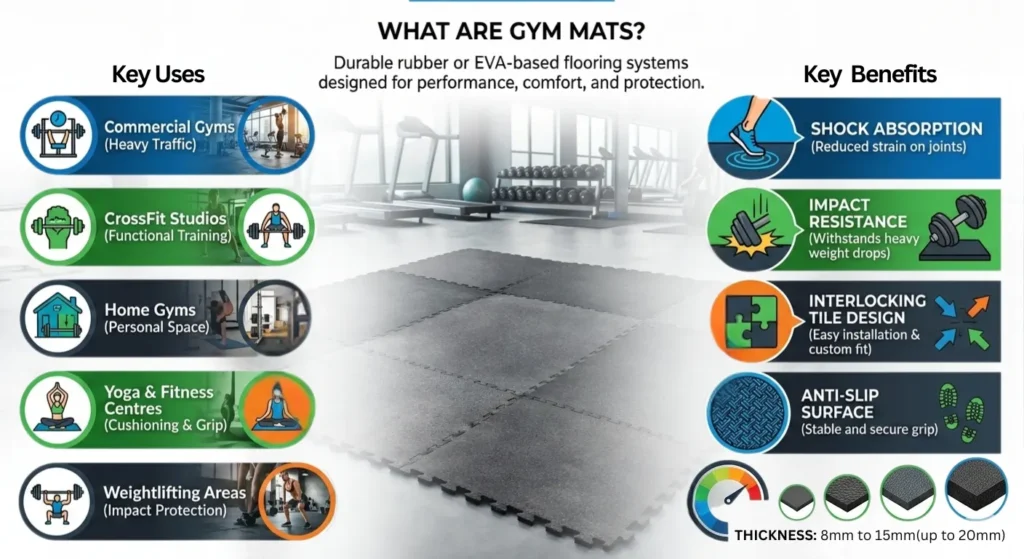
Key Features of Gym Mats:
- Shock absorption for workouts
- Impact resistance for weight drops
- Interlocking tile design
- Anti-slip surface
- Thickness: 8mm to 15mm (sometimes 20mm)
Gym mats prioritise human comfort and impact absorption, not extreme static load like livestock.
Tile Rubber Mat | Amoebic Top Groove Bottom with Puzzle
Cow Mats vs Gym Mats: Complete Comparison
1️⃣ Material Composition
| Feature | Cow Mats | Gym Mats |
| Material | Natural / Recycled Rubber | Rubber / EVA Foam |
| Density | Very High | Medium to High |
| Purpose | Heavy livestock load | Human workout impact |
Cow mats use a high-density rubber compound for long-term durability.
Gym mats often use softer rubber or EVA for flexibility.
2️⃣ Thickness Difference Between Cow Mats and Gym Mats
- Cow Mats: 17mm – 25mm (or thicker)
- Gym Mats: 8mm – 15mm (commonly)
Cow mats are almost 2x thicker because cows weigh between 400 and 900 kg.
3️⃣ Load Bearing Capacity
This is the biggest difference.
- Cow Mats: Designed to support 800–1200 kg static load.
- Gym Mats: Designed for impact resistance, not continuous heavy-weight pressure.
If you place a cow on a gym mat, it will flatten quickly.
If you drop heavy weights on a cow mat, it will handle it — but may feel too hard for workouts.
4️⃣ Shock Absorption & Comfort
Cow Mats:
- Designed for long-standing hours.
- Reduce joint stress in cattle.
- Improve milk production due to comfort.
Gym Mats:
- Designed to absorb weight drop impact.
- Reduce injury risk.
- Provide workout cushioning.
5️⃣ Surface Design
Cow mats usually have:
- Diamond top pattern
- Groove bottom for drainage
- Anti-slip livestock grip
Gym mats usually have:
- Flat or textured top
- Interlocking edges
- Smooth bottom surface
6️⃣ Durability & Lifespan
Cow mats are made for extreme farm environments:
- Urine exposure
- Moisture
- Mud
- High weight pressure
Lifespan: 5–8+ years.
Gym mats lifespan: 3–5 years, depending on usage.
7️⃣ Installation Difference
Cow Mats:
- Mostly solid sheets
- Heavy weight
- Permanent installation
Gym Mats:
- Interlocking tiles
- Easy DIY installation
- Portable options available
Can Cow Mats Be Used in a Gym?
Yes, but not always ideal.
When it works:
- Heavyweight lifting areas
- Industrial workout zones
- CrossFit heavy drop zones
When not recommended:
- Yoga studios
- Aerobic classes
- Soft training areas
Cow mats are harder and less flexible compared to gym mats.
Can Gym Mats Be Used for Cattle?
No — Not recommended.
Reasons:
- Not designed for 800kg+ continuous load
- EVA foam can tear
- Short lifespan in farm conditions
- No urine resistance design
Using gym mats in dairy farms leads to faster damage and replacement costs.
Which One Is Better for Dairy Farms?
✅ Cow Mats (Heavy Duty Rubber Mats)
Benefits:
- Improved cattle comfort
- Better hygiene
- Reduced injury risk
- Long-term durability
- Better ROI for farm owners
Which One Is Better for Gyms?
✅ Gym Rubber Mats
Benefits:
- Impact absorption
- Noise reduction
- Easy installation
- Professional gym finish
Quick Comparison Summary
| Factor | Cow Mats | Gym Mats |
| Thickness | 17–25mm | 8–15mm |
| Load Capacity | Very High | Medium |
| Best For | Dairy Farms | Gyms |
| Lifespan | 5–8+ Years | 3–5 Years |
| Surface | Diamond/Groove | Smooth/Textured |
Manufacturer’s Perspective: Choosing the Right Rubber Mat
As a global rubber mat manufacturer, we recommend:
- For livestock comfort → Choose high-density cow mats.
- For commercial fitness → Choose shock-absorbing gym mats.
- For bulk export → Select customised thickness and size as per region.
Choosing the wrong mat type increases maintenance costs and reduces product lifespan.
FAQ Section
Cow mats are designed for heavy livestock load and farm durability, while gym mats are made for workout impact absorption.
Yes, but mainly for heavy-weightlifting zones.
Cow mats generally last longer due to higher density and thickness.
17mm to 25mm heavy-duty rubber mats are ideal.
Final Verdict: Cow Mats vs Gym Mats
If your goal is:
- Dairy farm flooring → Go with heavy-duty cow mats.
- Fitness centre flooring → Choose gym rubber mats.
- Export business → Offer both categories separately.
Understanding the difference between cow mats and gym mats helps buyers make informed decisions and prevents costly mistakes.