
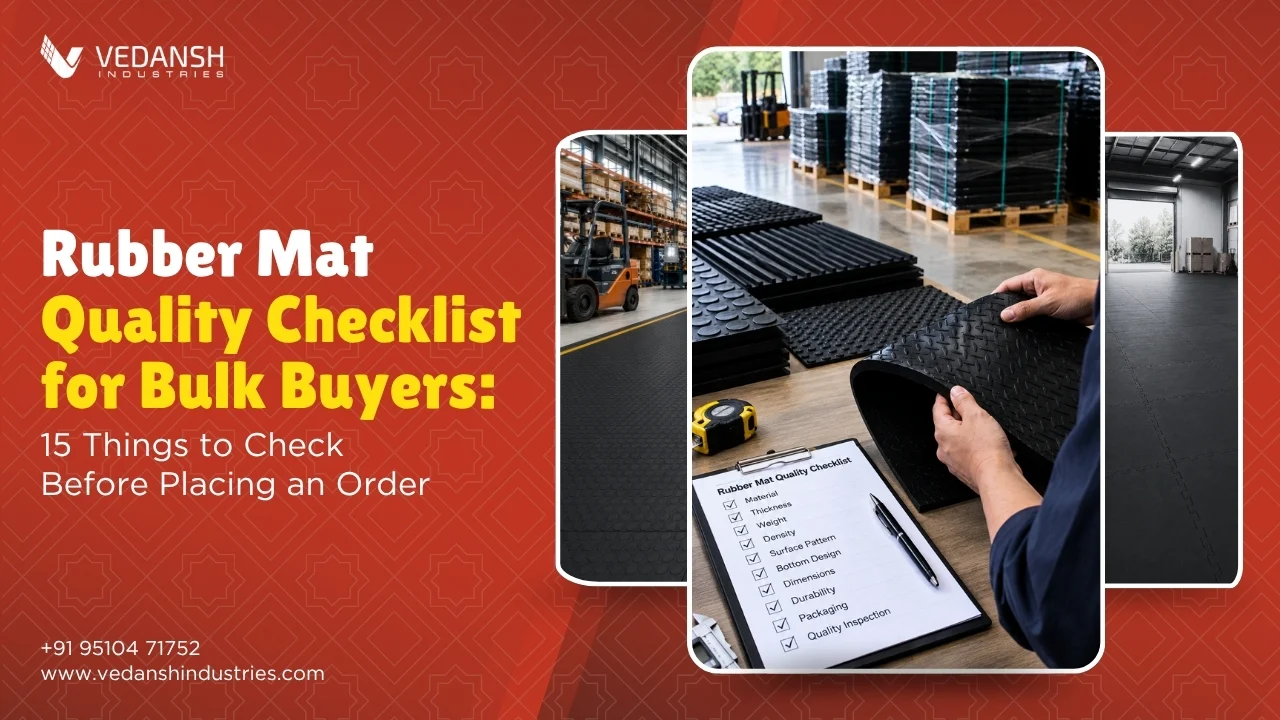
Buying rubber mats in bulk is not only about comparing prices. For dairy farms, gyms, factories, warehouses, animal facilities, distributors, and international buyers, the quality of the mats can affect safety, durability, maintenance, and long-term value.
Before placing a bulk order, buyers should check the rubber material, thickness, weight, density, surface pattern, bottom design, dimensions, durability, packaging, and quality inspection process.
Here is a practical rubber mat quality checklist to help bulk buyers make a more informed purchasing decision.
1. Check the Rubber Material
Ask the manufacturer what type of rubber or rubber blend is used in the mats. Material selection can affect flexibility, durability, surface performance, and suitability for different applications.
The manufacturer should be able to clearly explain whether the selected material is suitable for your intended use.
2. Verify the Actual Thickness
Thickness is an important specification when ordering rubber mats in bulk. Confirm the required thickness and acceptable tolerance before production.
Do not rely only on the product name or catalogue. Ask for the actual specification and, where possible, compare it with a physical sample.
3. Check Mat Weight
Weight is another useful specification for bulk buyers. Mats with the same dimensions can have different weights depending on their construction and material characteristics.
Ask the supplier for the expected weight per mat and check whether the production batch remains consistent with the approved specification.
4. Consider Density and Firmness
Thickness alone does not determine how a rubber mat will perform.
Density and firmness can influence how the mat responds to repeated use and load. A dairy farm, horse stable, gym, or industrial workspace may require different mat characteristics.
Tell the manufacturer where the mats will be used so the appropriate specification can be selected.
5. Select the Right Top Surface Pattern
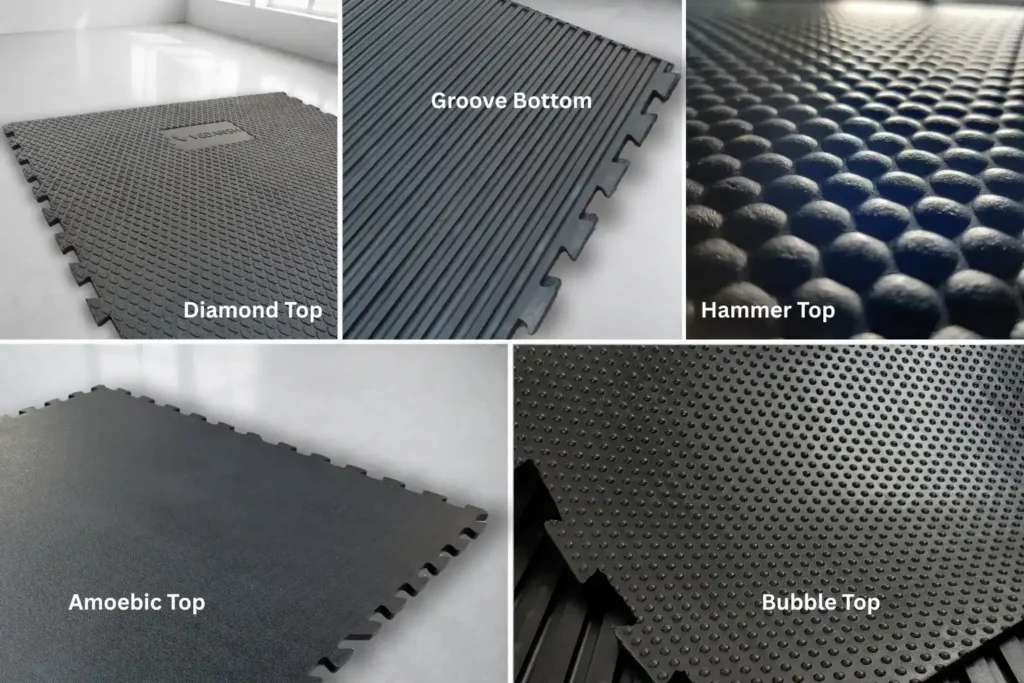
The surface pattern should match the application.
Common rubber mat designs include Diamond Top, Hammer Top, Bubble and other application-specific patterns.
When selecting the pattern, consider:
- Required grip
- Cleaning requirements
- Water or moisture exposure
- Animal or human traffic
- Type of working environment
The right pattern should be selected for performance, not simply appearance.
6. Check the Bottom Design
The bottom of the mat is also important. Depending on the product, buyers may choose designs such as ‘groove’, ‘stud‘, or ‘interlocking’.
Check whether the bottom design provides the required floor contact, drainage, stability, or installation support for your application.
For dairy and animal areas, drainage and floor conditions should be considered before selecting the bottom design.
7. Check Slip Resistance
If mats are being used in areas exposed to water, moisture, mud, or repeated movement, suitable surface grip is important.
Instead of simply asking for a “non-slip mat,” explain the actual application to the manufacturer.
For example, dairy farms, gyms, factories, and animal facilities can have very different flooring requirements.
8. Consider Drainage Requirements
Some applications require effective water and moisture management.
Before ordering, check whether you need a groove or other suitable bottom design. Also consider the floor slope, cleaning process, and expected water exposure.
This is particularly relevant for dairy farms, animal shelters, wash areas, and other wet environments.
9. Confirm Exact Dimensions
Always confirm the exact length, width, and thickness before approving a bulk order.
Consistent dimensions are especially important when many mats are being installed across one large area.
Ask about dimensional tolerance and make sure the agreed measurements are clearly mentioned in the order specification.
10. Check Edges and Interlocking Accuracy
For interlocking rubber mats, accurate edges are essential for proper installation.
Before placing a large order, check whether the sample pieces connect properly and maintain consistent alignment.
This can help reduce installation problems, uneven sections, and unwanted gaps.
11. Match the Mat to the Application
Not every rubber mat is designed for the same environment.
A gym mat, dairy cow mat, horse stable mat, and industrial mat can have different requirements.
Before ordering, tell the manufacturer:
- Where the mats will be installed
- Expected traffic or load
- Indoor or outdoor use
- Equipment or machinery involved
- Animal type, if applicable
This helps the manufacturer recommend a suitable product rather than simply focusing on price.
12. Ask About Durability and Wear
Bulk buyers should consider how the mats will perform under repeated use.
Depending on the application, rubber mats may experience foot traffic, animal movement, equipment loads, friction, and regular cleaning.
Ask whether the selected mat specification is suitable for the expected level of use and wear.
13. Inspect the Surface Finish
Always inspect a sample before approving a large production order.
Check for:
- Consistent surface finish
- Visible cracks or defects
- Uneven edges
- Surface irregularities
- Unusual or excessive odour
A sample inspection gives buyers an opportunity to identify concerns before committing to the full order.
14. Check Bulk and Export Packaging
Packaging becomes particularly important when mats are shipped in large quantities or exported internationally.
Ask the manufacturer how the mats will be packed and protected during handling, transportation, and storage.
For export orders, discuss packaging, labelling, container loading, and other shipment requirements before production.
15. Confirm Quality Inspection Before Dispatch
One of the most important questions for a bulk buyer is
How will my order be checked before dispatch?
Ask the manufacturer about its quality-control process and which specifications are checked before shipment.
Depending on the product, checks may include:
- Dimensions
- Thickness
- Weight
- Surface pattern
- Bottom design
- Appearance
- Quantity
- Packaging
For larger orders, buyers can also discuss sample approval or pre-shipment inspection requirements.
What Should a Rubber Mat Manufacturer Provide Before You Order?
A reliable manufacturer should be able to clearly discuss the specifications of the selected mat.
Before confirming your order, ask about:
- Size and thickness
- Approximate weight
- Rubber material
- Top and bottom design
- Application suitability
- Customization options
- MOQ and production capacity
- Sample availability
- Quality inspection
- Packaging
- Export requirements, if applicable
Clear specifications help the buyer and manufacturer work from the same requirements.
Why Is Sample Approval Important?
For a bulk order, approving a physical sample before production can help reduce misunderstandings.
Compare the sample with the agreed requirements for:
Size → Thickness → Weight → Surface → Bottom → Finish
Once the sample is approved, it can serve as a practical reference for the bulk production.
Quick Rubber Mat Quality Checklist for Bulk Buyers
Before placing your order, make sure you have checked:
| Factor | What to Verify |
|---|---|
| Material | Rubber type and application suitability |
| Thickness | Actual thickness and tolerance |
| Weight | Weight per mat |
| Density | Firmness and intended use |
| Top pattern | Diamond, Hammer, Bubble, etc. |
| Bottom | Groove, stud, interlock, etc. |
| Grip | Suitable surface traction |
| Drainage | Required drainage design |
| Dimensions | Length, width, and tolerance |
| Edges | Consistent finishing |
| Durability | Suitability for repeated use |
| Packaging | Bulk/export protection |
| Inspection | Quality checks before dispatch |
Final Thoughts
Choosing a rubber mat supplier for a bulk order should involve more than comparing prices.
Material, thickness, weight, density, surface pattern, bottom design, dimensions, durability, packaging, and quality inspection should all be considered before placing an order.
At Vedansh Industries, rubber mats are manufactured in India for dairy farms, animal facilities, gyms, industrial areas, commercial applications, and international bulk buyers. Buyers can discuss required sizes, thicknesses, weights, patterns, bottom designs, and custom requirements according to their project needs.
If you are planning a bulk rubber mat order, share your application, required size, thickness, quantity, and destination with the manufacturer before finalising your order.
FAQs
Check the material, thickness, weight, density, surface pattern, bottom design, dimensions, durability, packaging, and quality inspection process.
Thickness can affect the mat’s suitability for different applications, so buyers should verify the actual thickness before bulk production.
Yes. A sample allows you to check size, thickness, weight, surface, bottom design, and overall finish before larger production.
Yes. Weight can help buyers verify consistency with the agreed product specification.
It depends on the application. Groove, stud, and interlocking designs can serve different installation and drainage requirements.
International buyers should additionally confirm packaging, quantity, dimensions, product specifications, sample approval, and shipment requirements before production.
Choose a manufacturer that can clearly explain product specifications, provide samples when required, discuss customization, and maintain consistent quality across bulk production.