Where to Find a Reliable Custom Rubber Logo Mat Manufacturer for Bulk Orders

Introduction

Custom rubber logo mats are becoming an essential branding and safety solution for businesses across the USA, UK, and Europe. From corporate offices and retail chains to hospitality groups and industrial facilities, branded rubber mats improve brand visibility while enhancing floor protection and anti-slip safety.

However, many international buyers face a common challenge:

Where can you find a reliable custom rubber logo mat manufacturer for bulk orders?

With thousands of suppliers listed online, selecting the right OEM manufacturer requires careful evaluation. This guide explains where to search, how to verify manufacturers, what questions to ask, and how to build a long-term global supply partnership.

Why USA, UK & European Businesses Source Rubber Mats from Overseas

Global businesses prefer overseas sourcing for several reasons:

Cost-Effective Bulk Production

Large-scale manufacturers offer competitive factory pricing for container-load orders.

OEM & Private Label Customization

Buyers require:

  • Custom logo embossing
  • Pantone color matching
  • Private label packaging
  • Custom sizes & thickness

Large Production Capacity

International buyers often need:

  • Full container shipments
  • Consistent repeat supply
  • Scalable monthly production

Working with an experienced export-focused manufacturer ensures reliability.

Best Places to Find a Reliable Custom Rubber Logo Mat Manufacturer

1️⃣ Direct Manufacturer Websites

Search terms like:

  • “ISO certified custom rubber logo mat manufacturer”
  • “OEM rubber mat supplier for USA bulk”
  • “private label rubber mat exporter”

Direct factory websites provide better transparency, production details, and customization information compared to trading companies.

2️⃣ B2B Sourcing Platforms

You can compare suppliers on:

  • Alibaba
  • Global Sources
  • Thomasnet

These platforms allow you to:

  • Check supplier ratings
  • Compare MOQs
  • Request samples
  • Review trade assurance policies

However, always conduct independent verification before placing large orders.

3️⃣ International Trade Shows

Trade exhibitions like:

  • Canton Fair
  • The Big 5

allow buyers to physically inspect product samples and discuss OEM requirements directly with manufacturers.

How to Verify a Reliable Rubber Mat Manufacturer

Before confirming bulk production, verify:

Certifications

  • ISO certification
  • CE compliance (for Europe)
  • REACH compliance (EU market)

Export Experience

Ask:

  • Which countries do you supply?
  • Can you share export documentation samples?
  • Do you understand USA & EU import regulations?

Production Capacity

  • Monthly production volume
  • Mold development capabilities
  • Quality control system

Sample Approval

Always test:

  • Rubber durability
  • Logo clarity
  • Anti-slip performance

Key Questions to Ask Before Placing Bulk Orders

  1. What is your MOQ for custom rubber logo mats?
  2. What rubber compound do you use?
  3. Can you provide Pantone color matching?
  4. What is the lead time for container orders?
  5. Do you offer FOB, CIF, or DDP shipping terms?
  6. Can you support private label packaging?

These questions reduce future supply risks.

Shipping & Import Considerations for the UK, USA & Europe

International buyers must consider:

  • HS code classification
  • Import duties and tariffs
  • Sea freight vs air freight
  • Full container load planning
  • Required documentation

Experienced exporters simplify customs clearance processes.

Why Working with a Direct Manufacturer Is Better Than a Trading Company

Direct factory partnerships offer:

  • Better pricing transparency
  • Direct communication
  • Faster sample approval
  • Strong quality control
  • Better customization flexibility

This is especially important for repeat bulk orders.

Why Choose Vedansh Industries for Custom Rubber Logo Mats?
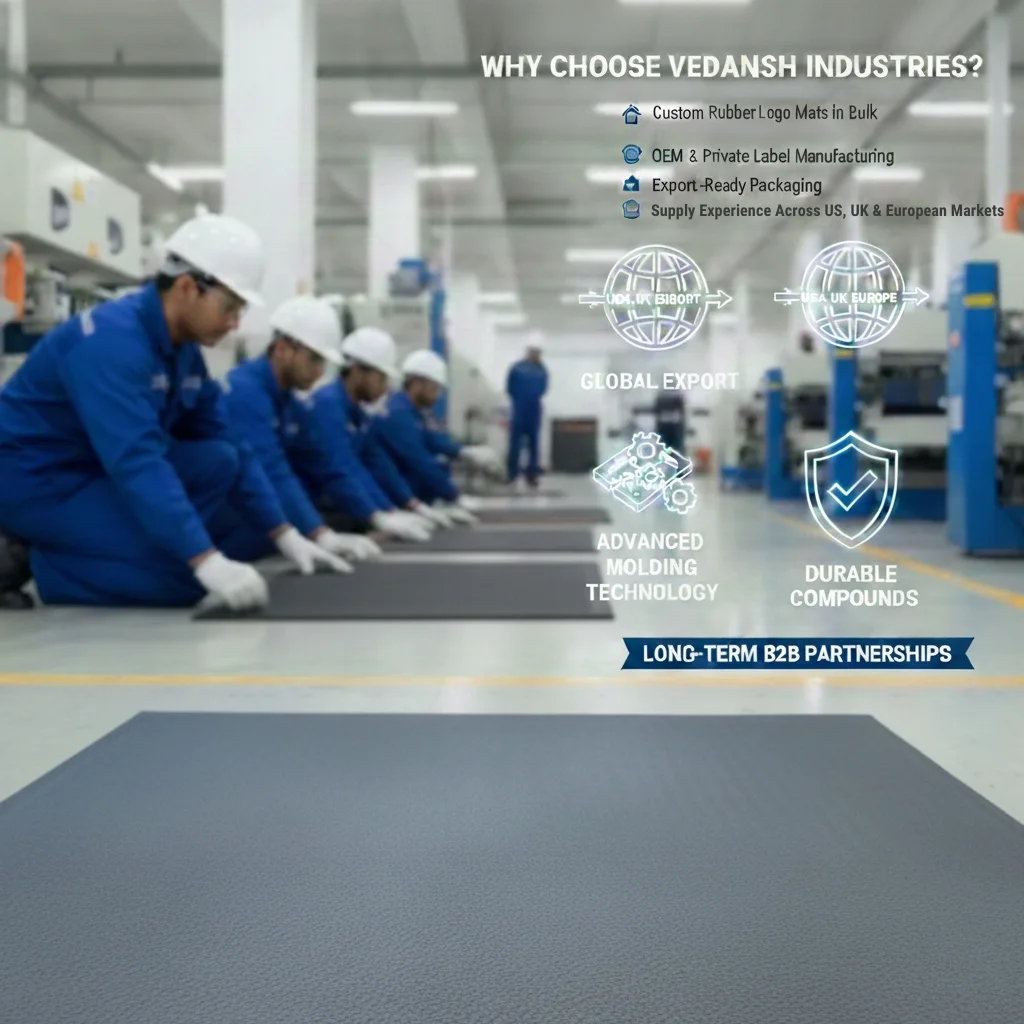
custom rubber logo mat manufacturer

For global buyers seeking a factory-direct OEM partner, Vedansh Industries specializes in:

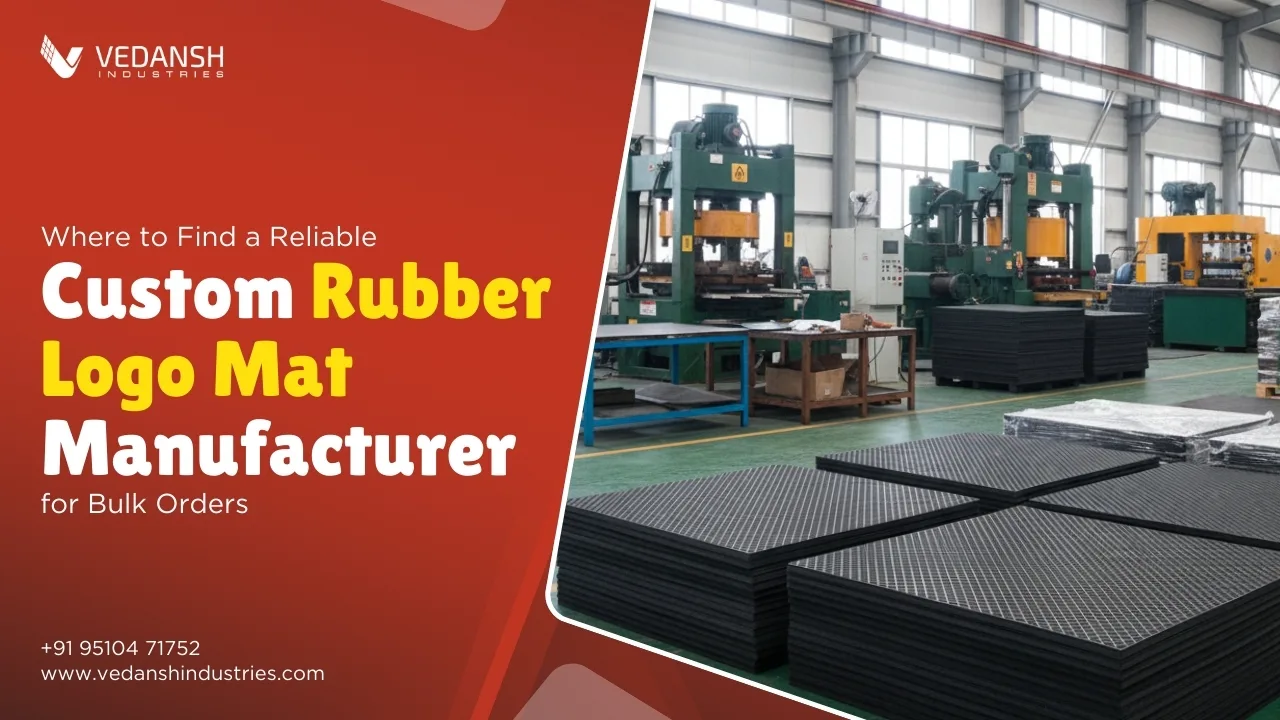
  • Custom rubber logo mats in bulk
  • OEM & private label manufacturing
  • Durable rubber compounds
  • Advanced molding technology
  • Export-ready packaging
  • Supply experience across USA, UK & European markets

With a focus on quality control and international standards, Vedansh Industries supports long-term B2B partnerships rather than one-time transactions.

Frequently Asked Questions (FAQs)

1. How can I find a reliable custom rubber logo mat manufacturer?

Look for ISO-certified factory-direct suppliers with export experience and verified samples.

2. What is the minimum order quantity (MOQ) for bulk logo mats?

MOQ usually starts from 200–500 pieces, but container orders offer better pricing.

3. Can I import custom rubber logo mats to the USA or Europe?

Yes, most export manufacturers provide required documentation and compliance support.

4. How long does bulk production take?

Production typically takes 3–4 weeks after sample approval.

5. Do manufacturers offer private label packaging?

Yes, OEM suppliers provide custom branding and export-ready packaging.

6. Is it better to work directly with a manufacturer?

Yes, factory-direct sourcing ensures better pricing, quality control, and customisation flexibility.

Conclusion

Finding a reliable custom rubber mat manufacturer for bulk orders requires proper research, verification, and strategic sourcing. Global buyers in the USA, UK, and Europe should focus on:

  • Factory-direct sourcing
  • Certification compliance
  • Export experience
  • Transparent communication
  • Quality consistency

For businesses seeking a dependable OEM partner, Vedansh Industries offers bulk custom rubber logo mats with international export support and long-term supply reliability.

Start by requesting samples and building a transparent partnership for scalable global sourcing.
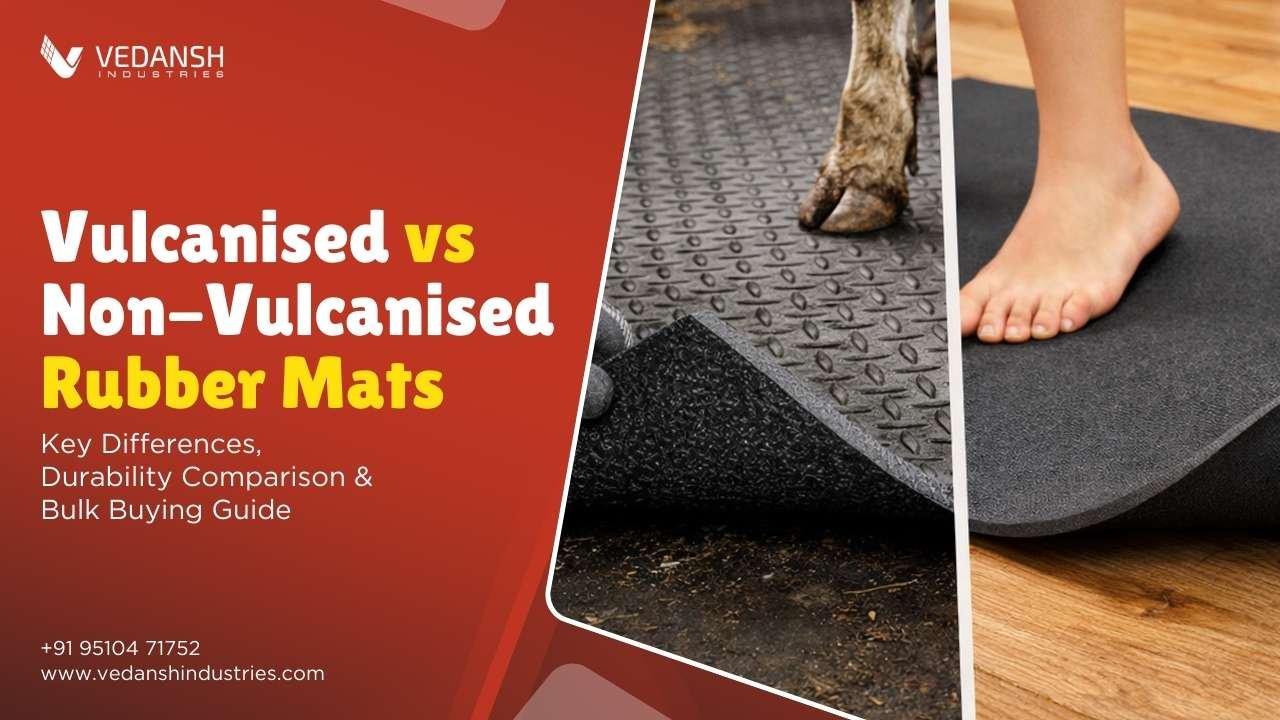
Vulcanised vs Non-Vulcanised Rubber Mats: Key Differences, Durability Comparison & Bulk Buying Guide

When it comes to choosing the right industrial flooring solution, understanding the vulcanised vs non-vulcanised rubber mats difference is extremely important — especially for dairy farms, gyms, warehouses, and industrial facilities.

Rubber mats are widely used for safety, durability, anti-slip performance, and heavy load resistance. However, not all rubber mats are manufactured the same way. The manufacturing process directly affects strength, lifespan, and long-term cost.

In this guide, we will explain:

  • What vulcanised rubber is
  • What non-vulcanised rubber is
  • Key differences between both
  • Which one is better for bulk and industrial buyers
  • How to choose the right rubber mat manufacturer

If you are a global bulk buyer, this comparison will help you make an informed investment decision.

What is Vulcanised Rubber?

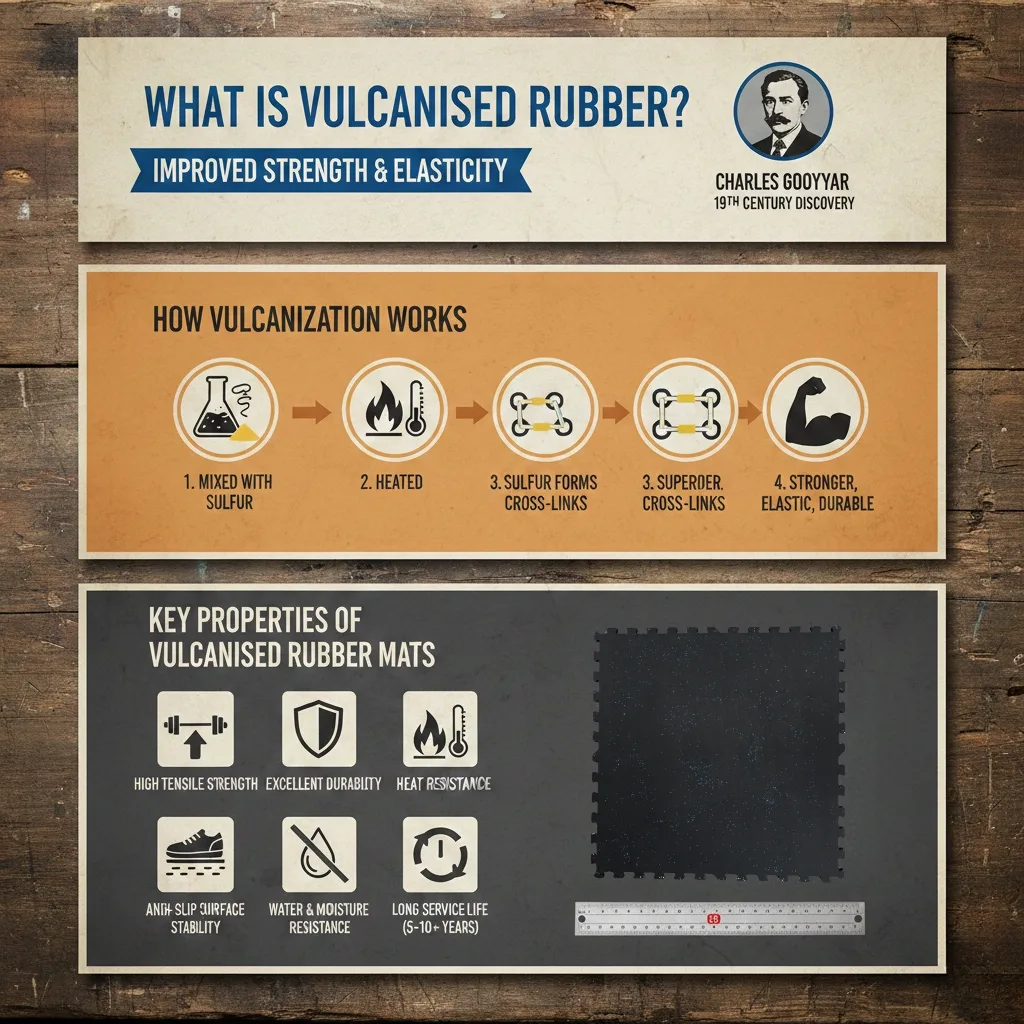
Vulcanised rubber is rubber that has been chemically treated with heat and sulfur to improve its strength and elasticity. This process was discovered by Charles Goodyear in the 19th century and revolutionized the rubber industry.

Vulcanised Rubber

How Vulcanization Works

During vulcanization:

  • Raw rubber is mixed with sulfur.
  • The mixture is heated under controlled temperature.
  • Sulfur forms cross-links between polymer chains.
  • The rubber becomes stronger, more elastic, and more durable.

Key Properties of Vulcanised Rubber Mats

  • High tensile strength
  • Excellent durability
  • Superior heat resistance
  • Anti-slip surface stability
  • Water and moisture resistance
  • Long service life (5–10 years or more in heavy-duty conditions)

Because of these properties, most heavy duty rubber mat manufacturers prefer vulcanised rubber for industrial and export-quality mats.

What is Non-Vulcanised Rubber?

Non-vulcanised rubber (also called raw or uncured rubber) is rubber that has not undergone the sulfur heat treatment process. It remains softer and more flexible but lacks structural strength.

Non-Vulcanised Rubber

Manufacturing Process

In this case:

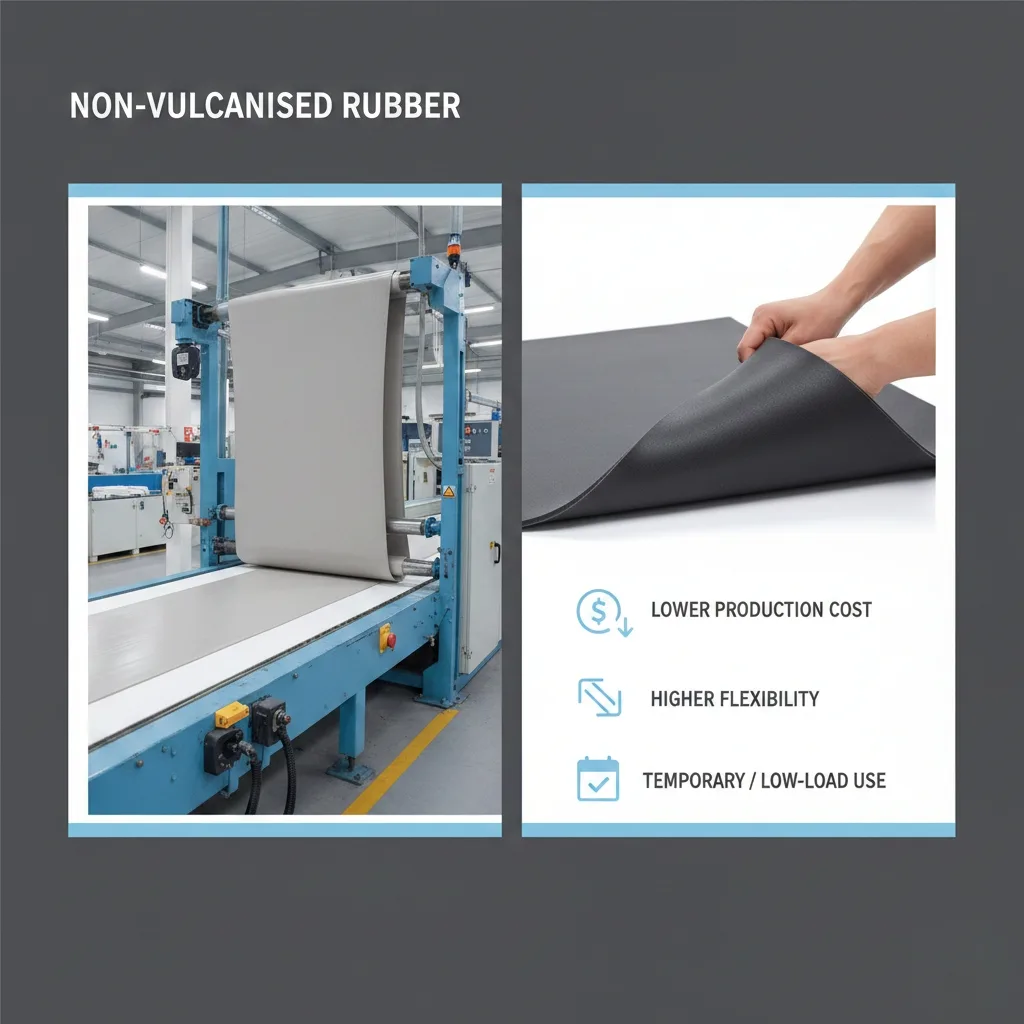
  • Rubber is processed into sheets or mats.
  • No cross-link bonding is created.
  • The material remains softer and less resistant to heat and pressure.

Key Properties of Non-Vulcanised Rubber Mats

  • Lower production cost
  • Higher flexibility
  • Reduced durability
  • Shorter lifespan (1–3 years in heavy use)
  • Limited heat resistance

Non-vulcanised mats are generally used for temporary or low-load applications.

Vulcanised vs Non-Vulcanised Rubber Mats: Quick Comparison

FeatureVulcanised Rubber MatsNon-Vulcanised Rubber Mats
DurabilityVery HighModerate
Lifespan5–10 Years1–3 Years
Heat ResistanceExcellentLow
Load Bearing CapacityHighLimited
Moisture ResistanceStrongModerate
CostSlightly HigherLower
Industrial SuitabilityHighly RecommendedLimited

From a long-term investment perspective, vulcanised rubber mats clearly offer better performance for bulk industrial buyers.

Which Rubber Mat is Better for Different Industries?

Choosing between vulcanised and non-vulcanised rubber mats depends on usage type. Let’s break it down industry-wise.

🐄 Dairy Farms & Livestock Flooring

Dairy farms require:

  • Anti-slip surface
  • High weight-bearing capacity
  • Comfort for animals
  • Easy cleaning
  • Long-term durability

Vulcanised rubber mats are ideal for dairy applications because they withstand constant animal movement, moisture exposure, and heavy loads.

Non-vulcanised mats may deform under pressure and wear out faster.

Recommendation: Vulcanised rubber mats for long-term dairy flooring solutions.

🏋️ Gyms & Fitness Centers

Gym flooring needs:

  • Shock absorption
  • Impact resistance
  • Noise reduction
  • Anti-slip grip

Vulcanised rubber mats perform better under heavy gym equipment and dropped weights. They maintain shape and provide long-term structural stability.

Non-vulcanised mats may compress over time.

Recommendation: Vulcanised rubber flooring for commercial gyms.

🏭 Industrial & Warehouse Use

Industrial facilities demand:

  • Chemical resistance
  • Machine vibration control
  • Worker safety
  • Long lifespan

Vulcanised rubber offers superior resistance to oil, grease, and mechanical stress.

Recommendation: Always choose vulcanised rubber mats for industrial environments.

🏠 Temporary or Low Budget Applications

If the requirement is short-term usage, light traffic, or cost-sensitive projects, non-vulcanised rubber mats can be a practical option.

However, replacement frequency should be considered in total cost evaluation.

Cost vs Long-Term Investment

Many bulk buyers initially focus only on price per square meter. But the smarter approach is calculating long-term ROI.

Vulcanised Rubber Mats

  • Higher upfront cost
  • Minimal maintenance
  • Longer lifespan
  • Lower replacement frequency

Non-Vulcanised Rubber Mats

  • Lower initial cost
  • Faster wear and tear
  • Higher long-term replacement cost

For export buyers and industrial clients, vulcanised mats usually provide better value over time.

How Bulk Buyers Should Choose the Right Rubber Mat

If you are sourcing from a rubber mat manufacturer, consider these factors:

  1. Thickness (15mm, 17mm, 20mm etc.)
  2. Surface pattern (Diamond top, bubble top, groove bottom)
  3. Load-bearing capacity
  4. Anti-slip rating
  5. Weather resistance
  6. Manufacturing standards
  7. Export packaging quality

For dairy and animal applications, patterned surfaces like diamond top or bubble top bottom groove improve grip and drainage.

Why Global Buyers Prefer Vulcanised Rubber Mats

International importers and distributors prefer vulcanised rubber mats because:

  • They meet industrial durability standards
  • They handle extreme weather conditions
  • They maintain structure during shipping
  • They offer higher tensile strength
  • They provide long-term customer satisfaction

For exporters and bulk suppliers, supplying vulcanised rubber mats enhances brand reputation and reduces customer complaints.

Frequently Asked Questions (FAQs)

1. What is the main difference between vulcanised and non-vulcanised rubber mats?

The main difference is the manufacturing process. Vulcanised rubber is heat-treated with sulfur, making it stronger and more durable, while non-vulcanised rubber remains softer and less resistant to wear.

2. Are vulcanised rubber mats waterproof?

Yes, vulcanised rubber mats offer excellent moisture and water resistance, making them ideal for dairy and industrial use.

3. Which rubber mat lasts longer?

Vulcanised rubber mats typically last 5–10 years under heavy-duty use, compared to 1–3 years for non-vulcanised mats.

4. Are non-vulcanised rubber mats cheaper?

Yes, they have a lower initial cost but may require more frequent replacement.

5. Which rubber mat is best for dairy farms?

Vulcanised rubber mats are best for dairy farms due to their durability, anti-slip surface, and heavy load capacity.

Final Verdict: Which One Should You Choose?

When comparing vulcanised vs non-vulcanised rubber mats, the choice depends on application and budget.

If you need:

  • Long-term durability
  • Heavy load resistance
  • Industrial performance
  • Export-quality strength

Then, vulcanised rubber mats are the superior option.

Non-vulcanised rubber mats are suitable for temporary or light-duty applications where cost is the main concern.

For bulk buyers, distributors, and industrial clients, investing in vulcanised rubber mats ensures better performance, reduced maintenance, and higher return on investment.

Looking for a Reliable Bulk Rubber Mat Manufacturer?

If you are searching for a trusted rubber mat manufacturer supplying heavy-duty vulcanised rubber mats worldwide, choose a company that focuses on quality manufacturing, export standards, and durable surface patterns designed for dairy, gym, and industrial use.

Contact Vedansh Industries today to get bulk pricing and export-grade rubber mat solutions tailored to your requirements.

Protect Your Cattle from Slips and Injuries with Anti-Slip Rubber Mats in Monsoon

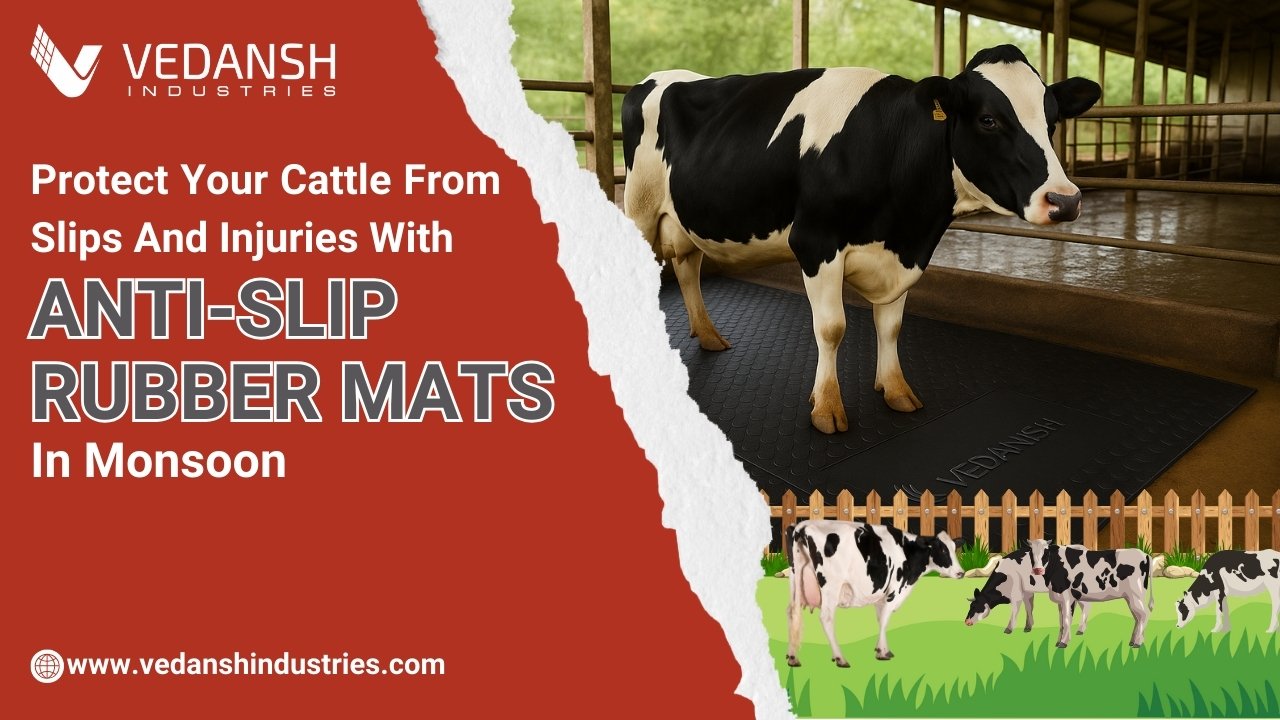
The monsoon season often makes cattle sheds wet and slippery, increasing the risk of accidents. Anti-slip rubber mats are the best solution to keep your animals safe, comfortable, and stress-free. They:

  • Prevent slips and injuries
  • Provide joint comfort
  • Maintain hygiene in sheds
  • Last for years, even in heavy farm use

Choosing Vedansh Industries’ cattle safety mats ensures strong grip, durability, and easy maintenance during the rainy season.

🌧 Why Anti-Slip Rubber Mats Are Essential in Monsoon

The rainy season brings relief from heat, but it also creates slippery, damp, and unsafe conditions for cattle on farms. Wet concrete, muddy surfaces, and waterlogged barns increase the risk of:

  • Slips and falls
  • Joint injuries and lameness
  • Reduced comfort and productivity

To protect your livestock, anti-slip rubber mats are the most effective and durable flooring solution during the monsoon.

🐄 Benefits of Anti-Slip Rubber Mats for Cattle Safety

1. Enhanced Grip & Safety

Specially designed grooves in cattle safety mats prevent slips, giving animals firm footing even on wet surfaces.

2. Injury Prevention

By reducing falls, monsoon rubber flooring minimizes injuries, helping maintain the health and productivity of dairy cattle.

3. Comfort & Stress Reduction

Rubber mats provide cushioning, reducing pressure on joints and ensuring cattle remain relaxed while standing or lying down.

4. Hygienic & Easy to Clean

Unlike bare concrete or mud floors, rubber mats are easy to wash and disinfect, keeping barns dry and hygienic during rainy days.

5. Durable & Weather-Resistant

Made from high-quality rubber, these mats withstand constant exposure to water, mud, and heavy animal weight throughout the monsoon season.

🌿 Why Choose Vedansh Industries Anti-Slip Rubber Mats?

At Vedansh Industries, we manufacture high-quality Diamond Top Bottom Groove Mats, hammer top bottom groove mats and Bubble Top Bottom Groove Rubber Mats, designed for:

  • Anti-slip protection in wet conditions
  • Long-lasting durability in heavy farm use
  • Improved animal comfort and safety

Our mats are trusted by dairy farms, cattle owners, and poultry farmers across India for reliable flooring during the rainy season.

✅ Best Ways to Use Anti-Slip Rubber Mats in Monsoon

  • Install mats in barns, cattle resting areas, and walkways
  • Clean regularly to maintain hygiene
  • Ensure proper drainage under mats to avoid water stagnation

❓(FAQs):

Q1: Are rubber mats suitable for heavy cattle during monsoon?

👉 Yes, our cattle safety mats are designed to handle heavy weight and prevent slips even in wet conditions.

Q2: Do rubber mats reduce animal stress?

👉 Absolutely. The cushioned surface reduces joint strain and helps cattle stay relaxed.

Q3: How long will these mats last?

👉 With regular cleaning and care, Vedansh Industries rubber mats can last for many years, even with daily farm use.

📞 Final Word:

Investing in anti-slip rubber mats this monsoon is the smartest way to protect your cattle from accidents and ensure their comfort.

👉 Explore our range of high-quality rubber mats at Vedansh Industries and safeguard your farm this rainy season.